

Choosing Peace
A Saturday morning lesson in mindfulness and brain chemistry

I woke up at 6am to the pre-dawn glow of my exterior lights on the ceiling. They shone through the blinds like thin razor blades extending across the room. Winds outside pressed against my windows, creating a sharp cracking sound in the wall as the house shifted and settled. It was a cold Saturday in late November, and I didn’t have an alarm or a reason to get up early. Instead, I enjoyed the stillness of waking from a restful sleep with no interruptions or pressure to rise, other than the slight insistence of my full bladder.
I remained in that liminal space for some time, listening to my own soft breath and the occasional meow of the cats outside my door. Until, at some point, my mind decided it was tired of subconscious thought. Sensing my wakefulness, it jumped into action with a determination to be heard.
Hearing the furnace running and feeling the comfortable heat, I couldn’t help but think about how much money I am spending right now. This house is big, and despite the many investments I have made to make it more efficient, when the winds blow and temperatures are below freezing, my heating bills can almost double. I recently spent several hours poring over my budget to get a better grasp of my upcoming financial picture. Between my retirement, divorce, one kid in college and another going off for a month-long study abroad, I am feeling less certain of finances than I have in decades. My mind wondered how much savings I have stored up, then began to calculate how long I could live on that if I needed to. This made me think again about the furnace and how if anything in this house breaks, how I might struggle to fix it.
My usual morning routine is very structured and peaceful, but this morning’s reveille felt like the bugler was standing at my bedside and I was already late to formation.
I rose, donned my slippers, and padded off to the bathroom. Maybe I’ll take this opportunity to brew some coffee, and watch the sunrise I thought to myself. Seconds later, I decided that 6am on a Saturday was too early by anyone’s clock, so I crawled back into the cocoon of warmth retained by my flannel sheets in hopes of reclaiming some weekend snooze time while I had it.
My mind was having none of that.
Rather than allowing myself to sleep, my thoughts about finances led me to think about what I could do to solve this problem. Because that’s what my mind wants to do—it wants to fix things. It wants to feel important.
Hence, I found myself opening my phone to look at recent jobs to which I have applied over the past month. I haven’t heard from almost any of them. It is probably because it’s the end of the year, near the holidays, right after the government shut down, I told myself. This probably isn’t a reflection of my suitability or employability. But little fears lingered and made me wonder if I was only fooling myself.
I do have a second job interview this Tuesday with a company that sounds very promising. The first interview went very well. I came away inspired and encouraged, both by what I heard about the company, and also by the tone of the interview. Tuesday’s meeting is with the CEO–a sign I took to be very promising because CEOs rarely have anything to do with hiring decisions. Why would he make time in his schedule to meet with me when a hiring manager would suffice, unless he wanted to have final say?
To focus my attention on something more positive than my money-burning furnace, I decided to read through the job description again, just to familiarize myself with what they had advertised.
To my surprise, the job posting had changed slightly since I saw it a few weeks ago.
Now it read “At this time, we’re not actively hiring for this role. However, we expect to open several Principal Scientist positions in early 2027, and we’d love to start building relationships with people who may be a great match for future opportunities. If this timing feels right for you, please feel free to express interest so we can stay connected as we get closer to hiring. If you’re looking for something sooner, we’d still encourage you to check back for upcoming openings.”
That was… unexpected.
How Scientists Get Paid
Most jobs in my sector are dependent on grant funding. Many job postings come with a disclaimer that the job is dependent upon successful award of a contract. This means that the company has submitted a proposal for a grant, and is trying to get a team in place in case that grant is funded.
Grant applications for large research projects often require a listing of personnel and their expertise. It is not uncommon for a company to fabricate employees on a grant application, and then use the employee descriptions as job advertisements to hire for positions they will need.
For example, the grant application might read: Our senior scientist is a leading expert in the field of computer vision, and has 20+ years in industry with deep familiarity with government regulations in vision science and applied mathematics.
This easily becomes: XYZ company is hiring for a senior scientist role to lead our advanced development and innovation division. Ideal candidates will have a PhD in machine learning, computer vision, or similar. 20+ years of computer vision expertise, with familiarity and experience in government regulations is a plus.
Companies will interview and select people for these roles, negotiate salaries, and then wait. If they win the grant, the person is hired and they begin work on the project they just pledged to do. If the company doesn’t win the grant, then the job doesn’t materialize.
If you weren’t aware, the current state of grant funding from the major sources (e.g., National Institutes Of Health, National Science Foundation, etc) is pretty dismal. Policy changes and major shifts in priorities from the executive branch of government have sent many of my colleagues scrambling to cover their bottom line to accomplish the same work that was heralded as critical and innovative only a year ago. Oh, and I have just retired after 20 years in the Navy. As of the first of the upcoming new year, I will bring home a pension that is 50% of what I make today, but with all the same obligations as before, plus a few new ones.
I am definitely not in a position to wait and hope for a job to materialize.
Tuesday’s interview suddenly went from feeling very positive and solid, to something that could very well be a waste of my time.
The other jobs? Well, they haven’t called yet. And now that we’re in the period between Thanksgiving and Christmas, it is highly unlikely I will hear from them before the new year.
It is amazing how quickly my mind sneaks in and steals a beautiful Saturday morning. Like a sly fox slipping through a crease in the fence and snatching away a chicken, my mind starts running through doomsday scenarios that make me want to inventory the contents of my deep freezer to see how long I can make it before I have to consider eating the cats.
Silly mind. Always up to no good.
At 46 years old, I have enough experience to know that nothing I do in that state of mind will help anything.
So I rose and commenced to take back my Saturday serenity.
I quietly made my bed, returned the sheets and comforter to their crisp position, and placed the decorative pillow shams in their original place. I returned my feet to the slippers I had kicked off earlier, and proceeded to execute the plan I had before—coffee, sunrise, calmness.
Two cats jogged ahead of me as I descended the stairs, meowing as if to guide me towards their intended goal. I passed the glass French doors of my home office, whose walls are adorned with plaques, photographs, and accoutrements from 20+ years of military service. I wonder what these walls will look like in another 20 years.
The kitchen greeted me with the warm scents of celery and rosemary coming from a turkey carcass slow cooking overnight—a great way to create many ounces of rich, creamy broth from Thanksgiving leftovers. Through the sink window I took in the forest stretched before me. Its bare and lifeless trees had only a few straggler leaves remaining on their long, slender branches waving slowly in the breeze. Behind the grey forest was a wall of deep blue, unadulterated by anything except the sun whose brilliant light shone through my south-facing windows and created several skewed, orange carnival-like patterns of window panes across the hardwood floor.
I took in these scenes just as I have described them, slowing down my mind and shifting into a deliberate appreciation of my physical senses. By doing so, I forced my mind and its incessant need to ‘fix’ things and create fears and worries to the background.
The Neuroscience of Worry
One benefit of being an interdisciplinary scientist is that you tend to learn a lot of useful things. For instance, did you know that the concept of multitasking is completely bogus? Your consciousness literally cannot attend to more than one thing at a time. It has been empirically demonstrated that, while we can switch rapidly between things, our brains are not capable of conscious, multi-threaded processes. Psychologists have capitalized on this knowledge by teaching people to choose their thoughts, rather than allowing them to wander aimlessly (something eastern philosophies have taught for millennia).
The industry calls this mindfulness. I call it choosing peace, and it is pretty much how I function these days.
Years ago, when life looked a high chair after an infant’s first birthday cake, and every day felt like I was driving on four flat tires, I was introduced to the concepts of mindfulness as part of rehabilitation from a traumatic brain injury and attendant PTSD. I learned how to recognize when my mind was creating problems, and practiced simple steps to regain some control over what was shockingly introduced to me as an addiction to fear.
Brain sciences have matured to a point where neurotransmitters are part of everyday vernacular. For example, Dopamine—the brain chemical most commonly associated with short term pleasurable experiences—is increasingly discussed as the craving many people rush to satisfy in the era of non-stop sound bytes, ubiquitous screens and 10-second videos of political rants, car crashes, and the occasional cat compilation. Dopamine addiction is a common phrase, even in the scientific literature today. And that makes intuitive sense. After all, people tend to become addicted to things that make us feel good, right?
Well, it turns out we can become addicted to almost anything—even misery. The brain doesn’t care whether a chemical state feels good or bad. It only cares about predictability. And if cortisol has been your constant companion long enough, your brain will start to miss it when it’s gone.
This kind of compulsive thinking is actually an addiction. What characterizes an addiction? Quite simply this: you no longer feel that you have the choice to stop. It seems stronger than you. It also gives you a false sense of pleasure, pleasure that invariably turns into pain. -Eckhart Tolle
Tolle understood intuitively what neuroscience has now confirmed, that our brains don’t reset instantaneously when we shift our attention. Stress hormones like cortisol have a half-life of 60 to 90 minutes. That means it can take up to six hours for your body to fully metabolize and clear it out after you’ve gotten really spun up about something.
Think about what this means. If you spend your morning worrying about one thing, then switch to worrying about something else before lunch, and then obsess over a third concern in the afternoon, you’re essentially bathing your brain in cortisol all day long. Even if you try to distract yourself, your blood system is still pulsing with stress hormones from earlier. Each worry triggers a fresh release before the previous one has cleared. Your body never gets a chance to return to baseline. The chemical residue of earlier fears lingers in your system, stacking on top of new ones, creating a sustained state of anxiety that becomes your new normal.
Over time, this quite literally becomes physiologically addictive. Your brain adapts to the constant presence of stress hormones. It begins to expect them, even seek them out. And just like other serious physical addictions, you can experience withdrawal symptoms when you cut that out. Without something to worry about, you may feel restless and incomplete. And in that stillness, your mind will literally manufacture problems just to justify the chemical state your body has grown accustomed to maintaining.
A Gentle Return
So when I rose from bed this morning, feeling nervous and anxious about the future and its abundant uncertainties, I made a deliberate decision to focus on my surroundings and attend to their many aesthetic qualities. This is the antidote to allowing my day to be consumed with fear hormones.
This is how I choose peace.
Within minutes, standing before the golden splendor that was this early winter morning, I felt a comfortable calmness return as I sipped my coffee and brought my attention to its bitter aromas and the sultry rising steam. And with that stillness also came another byproduct of choosing peace: alternative perspectives.
While the company’s posting change could signify they don’t actually have a job for me right now, it is equally possible that the company could have changed their listing as a result of my first interview.
They may have already decided to hire me, and because they’ve already paid for the job posting, rather than taking it down entirely, they may have decided to change the wording and keep it open in case other qualified candidates with more flexibility in their timing show up. Tuesday’s interview with the CEO may be mostly a formality. He may want to have final say in hiring, and my meeting with him is his confirmation that I am a good candidate. Our meeting could be more of a strategy session for how I am going to augment the existing research team than a traditional interview.
There’s really no way to know for sure until Tuesday.
And because my worrying changes nothing about what’s actually true, I have the privilege of choosing what I think.
The cats are fed. The coffee is hot. The sun is rising whether I worry about it or not. This is what recovery looks like—not the absence of fear, but the willingness to set it down and return to the morning I was given.
About the Author
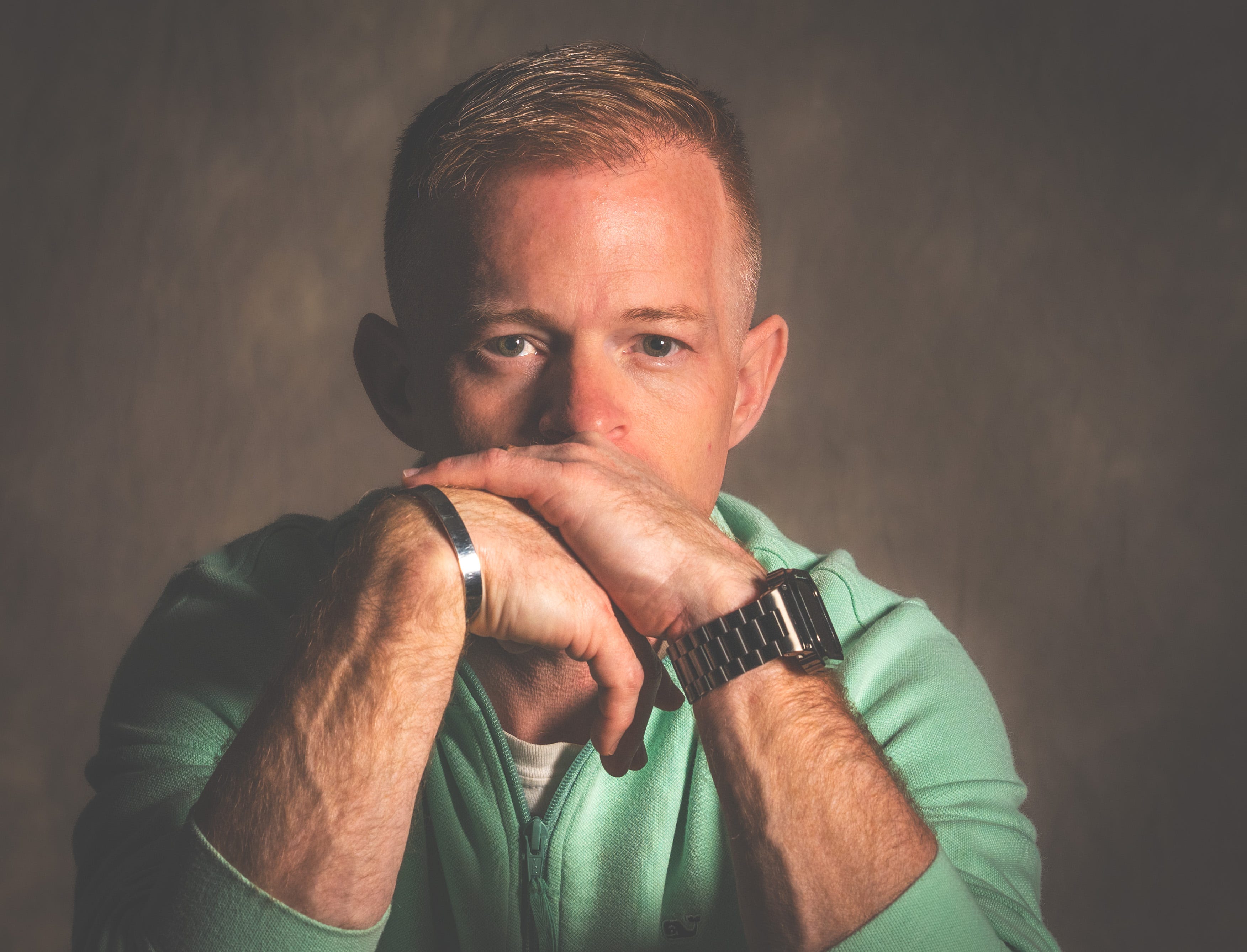
Hi. I’m Eric. After 20 years as a Navy Aerospace Experimental Psychologist, I’m navigating what comes next—retirement, reinvention, and learning to trust that not knowing is okay. I write about trauma, recovery, and the messy work of becoming honest with yourself. My thoughts are my own, and I don’t really eat cats.
If what you read resonated, please like, subscribe, share, or all three!
May we all recognize that we can choose our thoughts. 🙌 Love this reflection, Eric.